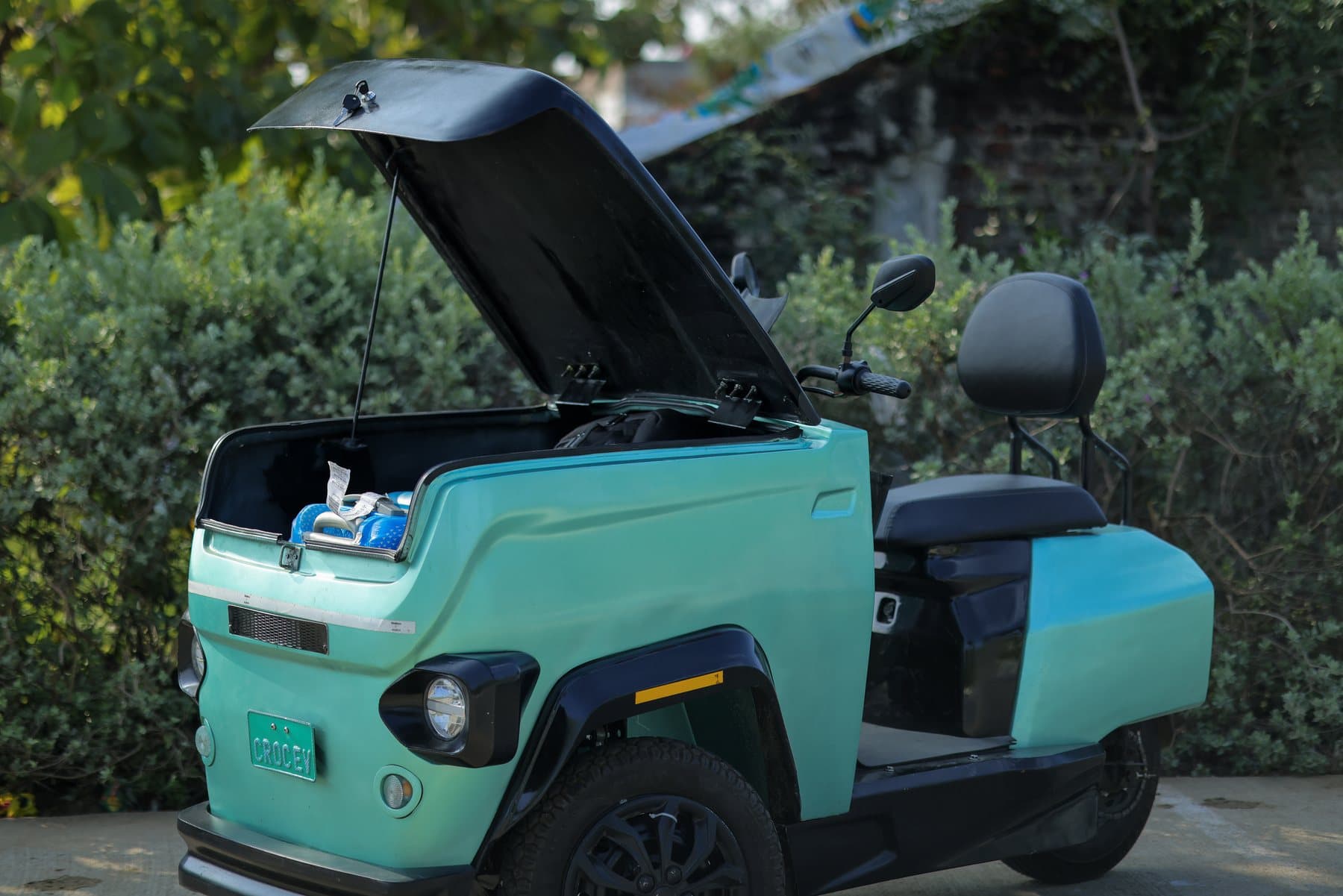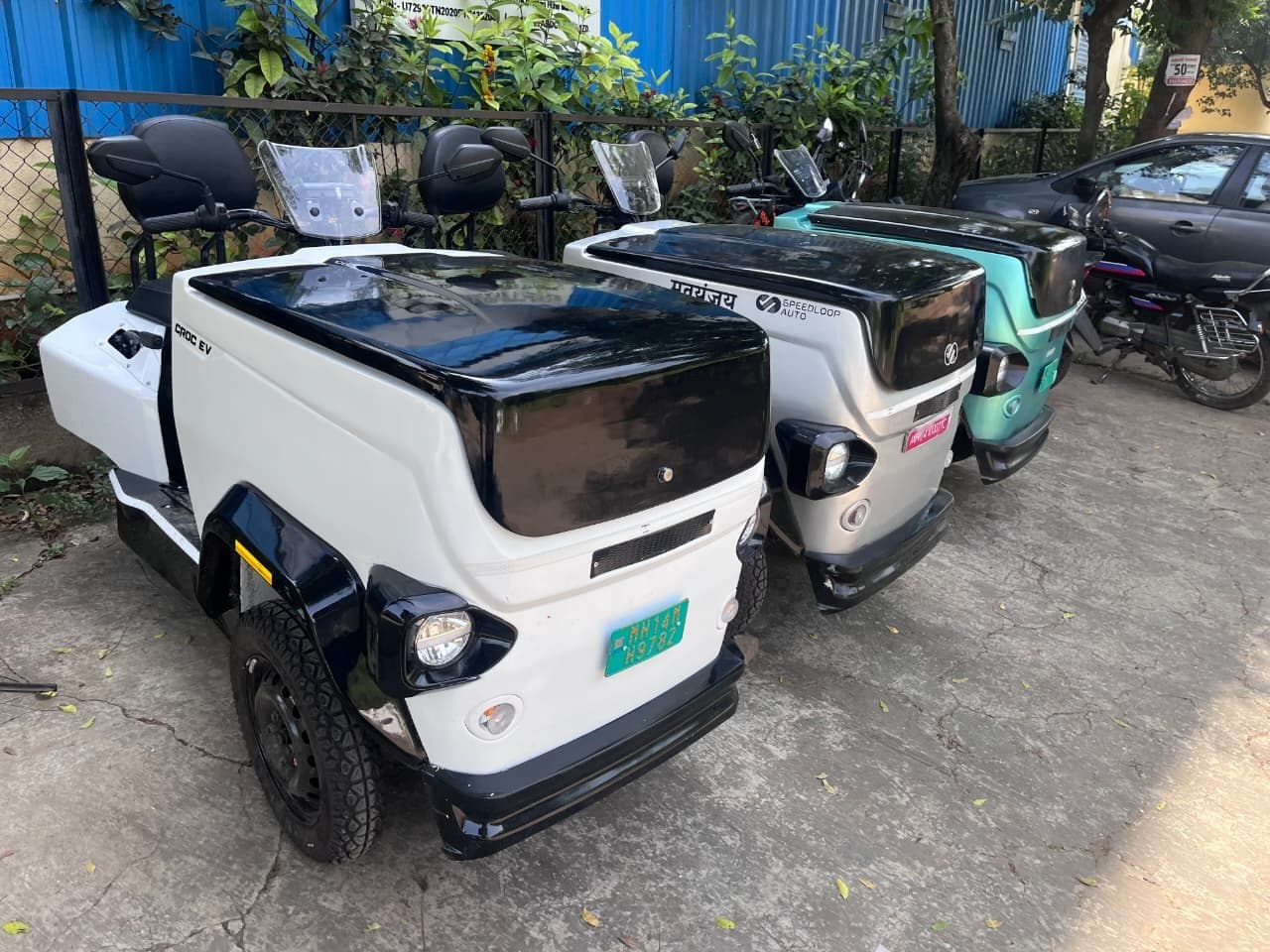
After charging, the question we hear most is about range. Will one battery cover my day? When do I need a second? The answer depends on your route more than on the vehicle, so this post shows how to work it out yourself, with every assumption written down.
Start with the spec sheet
Battery and range
- Battery
- 2 kWh lithium-ion NMC, removable
- Range
- 40 km, 80 km with a second battery
- Charging
- About 2 h 30 min, 750 W charger, 5 A plug
- Battery care
- Smart thermal warning
- Payload
- 80 kg, plus 25% overload allowance
- Top speed
- 25 km/h
Two facts matter most. The battery is removable, so a second battery can charge at base while the first is on the road. And range is given per battery: 40 km on one, 80 km with a second.
Measure the day, not the map
Planned routes are almost always shorter than real ones. Detours, a missed turn, a second trip to one customer and the run back to the charging point all add up. Measure a real working week instead:
- Note the odometer at the start and end of each working day, or record the day's trips on a phone map.
- Write down the load on each day, roughly: light, normal or heavy.
- Mark the days with extra rounds, such as weekends, festival weeks or month-end.
- Take the longest normal day, not the average, as your planning figure.
One battery, two batteries, or a top-up
With the longest normal day in hand, the choice is usually clear:
- Up to 40 km, with the vehicle back at base every night: one battery, charged at the end of each day.
- Up to 40 km over two shifts, with a reliable break of two and a half hours or more between them: one battery with a midday top-up can work.
- Between 40 km and 80 km: two batteries. One charges at base while the other is on the road, and the swap happens when the vehicle comes back between rounds.
- Regularly above 80 km: the route needs a rethink. Split it between two vehicles, or move the base closer to the work.
Working out the energy yourself
You can work out how much electricity a working day uses with a few lines of arithmetic. Here is the method, with the assumptions written down.
- Assumption: one full battery holds 2 kWh and covers 40 km.
- Energy for each kilometre: 2 kWh ÷ 40 km = 0.05 kWh, which is 50 Wh.
- Energy for the day: multiply the day's kilometres by 0.05. A 30 km day uses about 1.5 kWh, and a 60 km day on two batteries uses about 3 kWh.
- Units on your bill: one kWh is one unit. Multiply the day's units by the rate per unit on the electricity bill where the vehicle charges, and you have the day's charging bill in your own numbers.
Charging also loses a little energy as heat in the charger and battery, so the socket supplies slightly more than the battery stores. For your own true figure, plug a simple energy meter between the socket and the charger for a week and read the units it records.
A daily battery routine
Range planning only works if the routine is the same every day. Write it down for the driver:
- Morning: check the battery level on the display before loading. If it is not full, find out why before the round starts.
- On the road: watch for the smart thermal warning, and follow the owner's manual if it shows.
- Between rounds: if you run two batteries, swap at base and put the used one on charge straight away.
- Evening: park in the shade, give a hot battery time to cool, then charge from the earthed 5 A socket you chose for it.
- Weekly: note the kilometres run and the units used, so you notice early if the figures change.
Work it out with us
Send your route on WhatsApp to UrbanCarriers by Speedloop Auto at +91 86250 40203 with your longest normal day in kilometres and the hours the vehicle stands still, or tell us what you carry and where at speedloopauto.com/contact. We will help you decide between one battery and two, and we can also talk through financing support.
For choosing the socket and charging habits, read charging from an ordinary 5 A socket. Every battery figure is also on the CROC EV spec sheet.