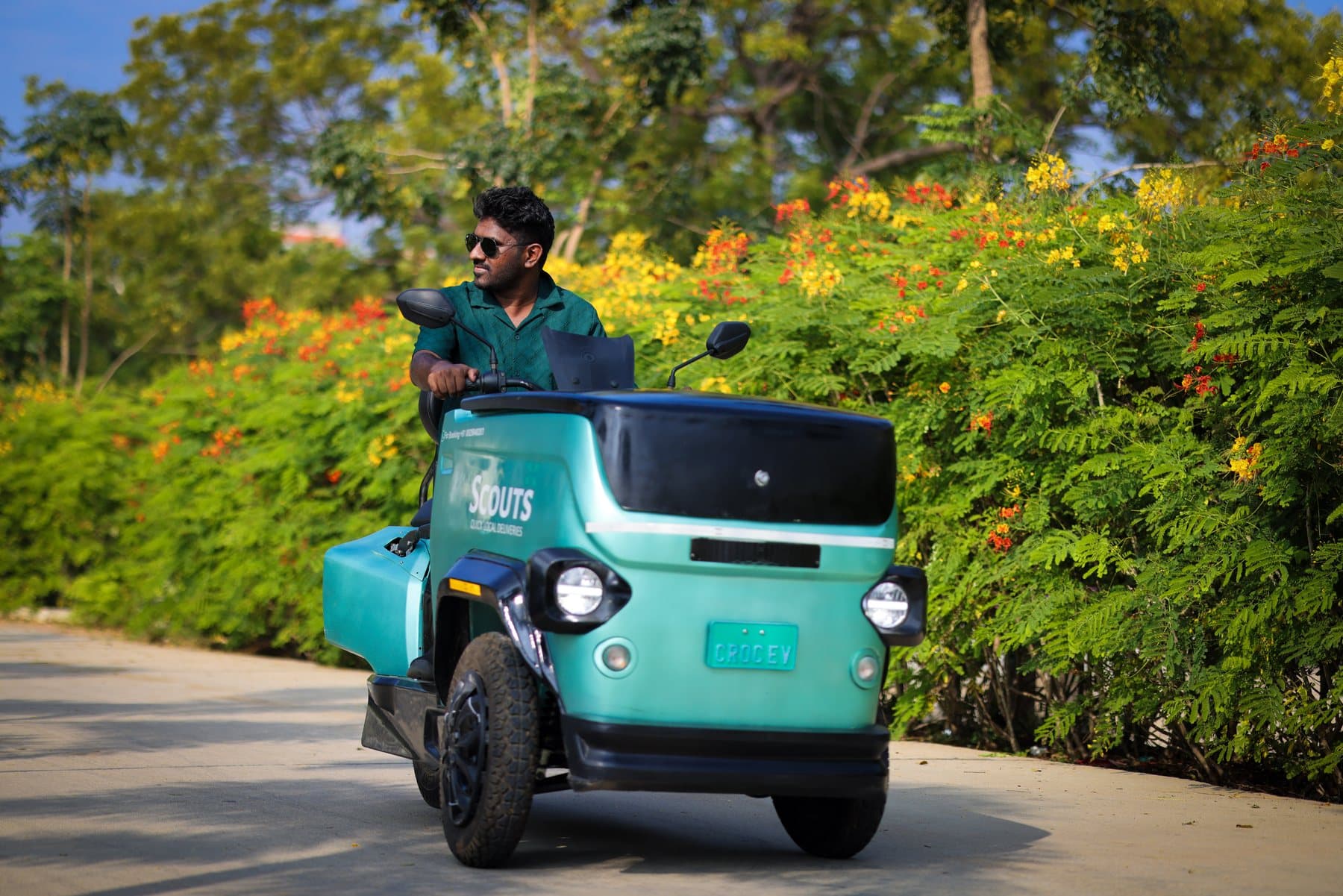
The shutter goes up at a fixed time, and the shelves have to be full by then. For a kirana owner, that means a trip to the wholesale market or a distributor's godown before opening. For a distributor, it means a round of ten or fifteen shops, each wanting a different mix, all before the morning rush.
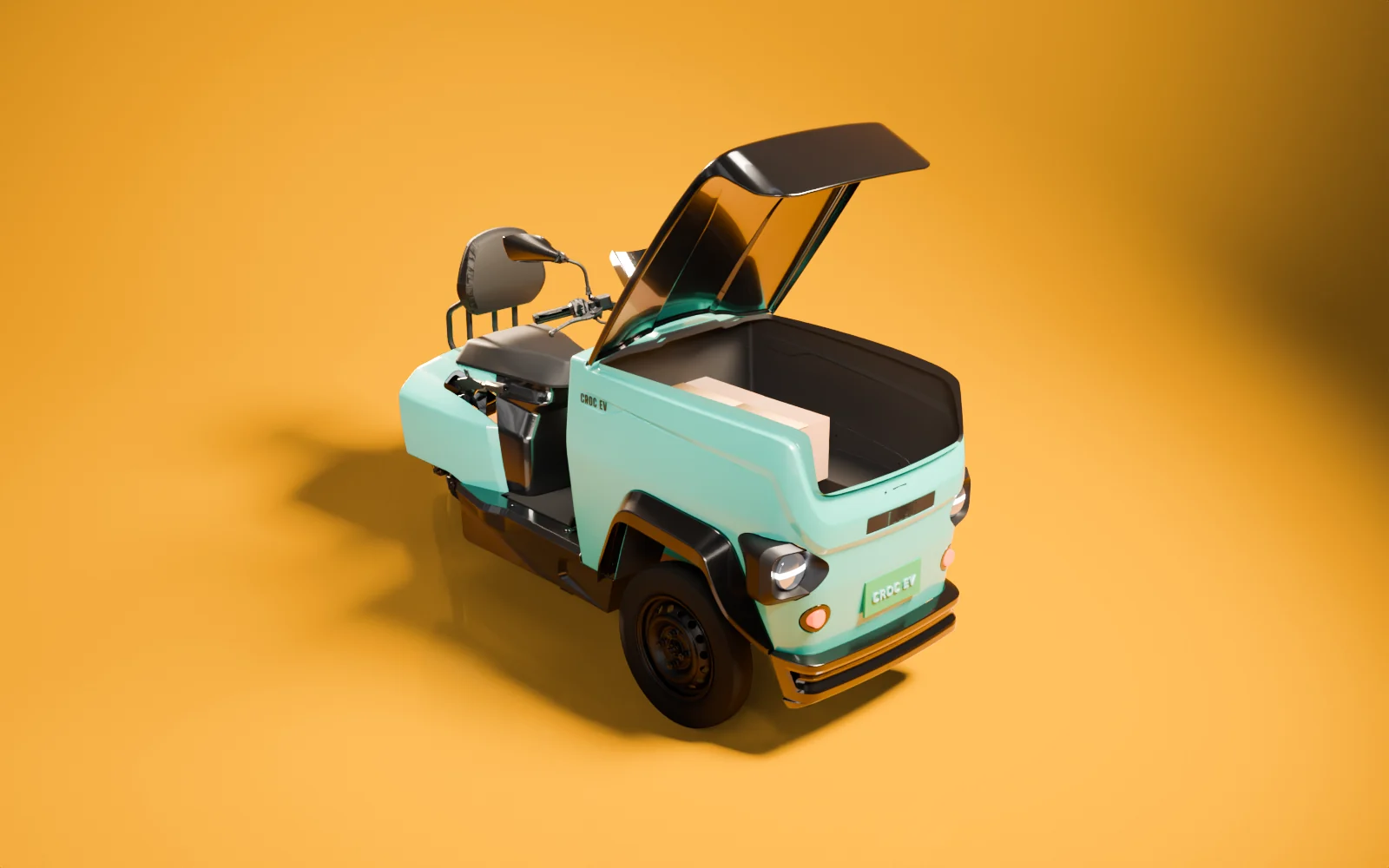
Shop stock is a mixed load. Some of it is heavy for its size, like oil tins, sugar and atta. Some is bulky and light, like biscuits, chips and cleaning products. This post shows how to plan a restock round that respects both, around CROC EV's 380-litre box and 80 kg payload.
Two restock jobs, one vehicle
- The shop owner's run: one shop, one or two suppliers, a single loop early in the morning, and a top-up run in the afternoon when a fast-moving item runs out.
- The distributor's round: one godown, many shops, a set order of drops, and empties, crates or damaged stock collected on the way back.
Both are short, frequent and tied to the clock, which is the work CROC EV is built for. The planning is a little different for each, so keep the job you do in mind as you read on.
Weigh the heavy lines first
In a kirana load, a few heavy lines decide the weight. Weigh your usual order on the shop scale, line by line. You will usually find that edible oil, staples in large bags and bottled drinks make up most of the weight, while snacks and packaged goods take up most of the space.
If the heavy lines alone take most of the 80 kg, split them: carry staples on one run and packaged goods on another, or ask the supplier to send the heaviest lines separately. Keep the 25% overload allowance, which takes the vehicle to 100 kg, for the occasional festival-week morning, not for every day.
Planning a distributor's multi-stop round
- List the shops in the order you visit them, with each shop's order in kilograms.
- Add the orders up. Where the running total passes 80 kg, end the round there and plan a reload at the godown.
- Load in reverse: the last shop's order goes in first, the first shop's order goes in last, nearest the lid.
- Keep each shop's order together in its own labelled crate or bag, so nothing is counted out in the lane.
- Add the distance of every round, including the trips back to the godown. Keep the total within 40 km on one battery, or 80 km with a second battery.
- Set the start time. Allow for the top speed of 25 km/h and the minutes at each counter, so the last shop is stocked before it opens.
The numbers for a restock round
- Payload
- 80 kg, plus 25% overload allowance (100 kg)
- Cargo box
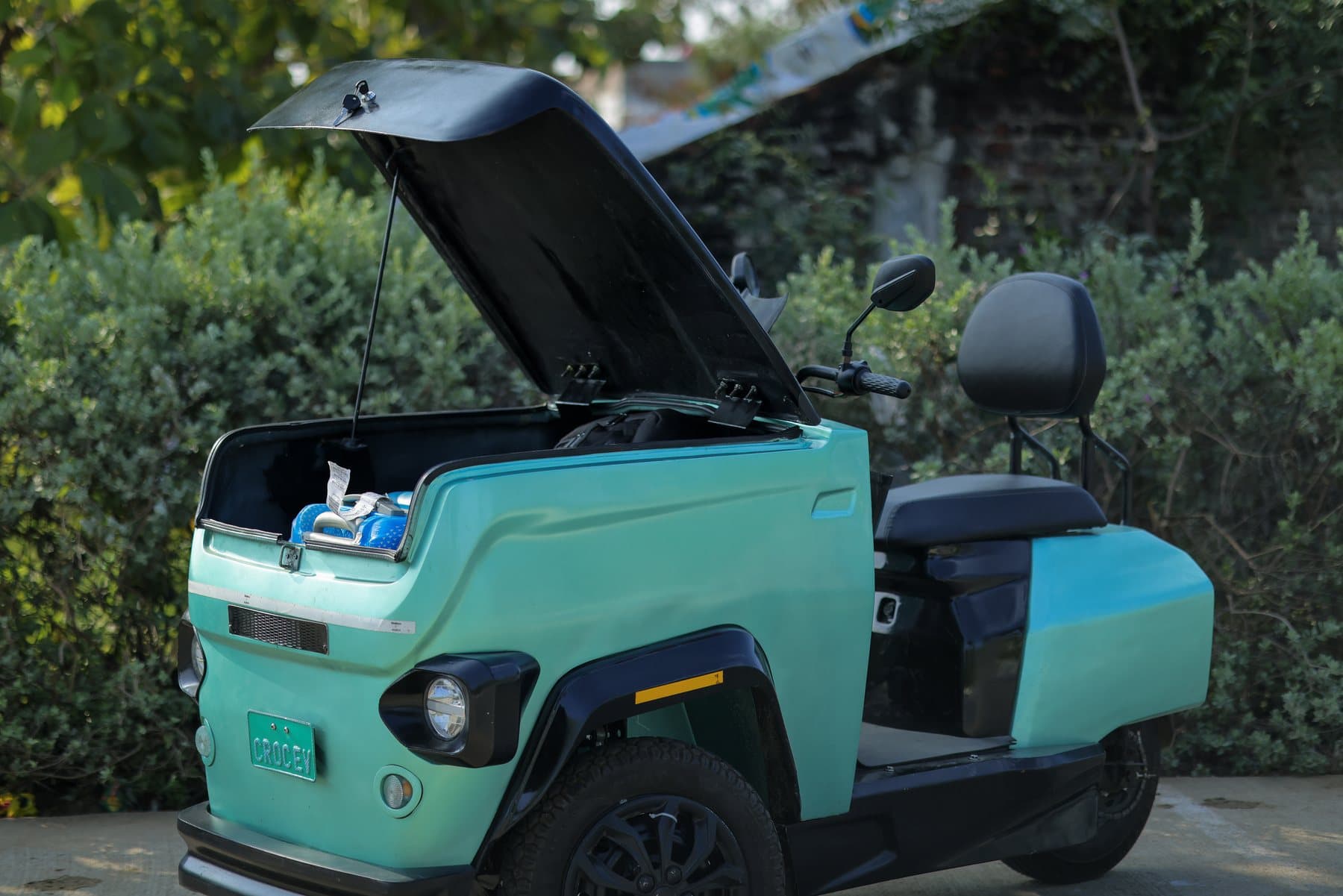
- 380 litres, lockable, in front of the driver
- Box build
- FRP with steel reinforcement
- Overall width
- 930 mm
- Range
- 40 km, 80 km with a second battery
- Top speed
- 25 km/h
Market lanes and shop fronts
Wholesale markets are crowded early in the morning, and many shops sit on narrow lanes with nowhere to park a bigger vehicle. With an overall width of 930 mm, CROC EV fits most market lanes and can stop close to the shop front. Check the narrowest lane on your round, and any kerb or ramp you have to cross, against the ground clearance of 170 mm.
The vehicle stands on its own, so the driver can step off and carry an order in without propping up a loaded two-wheeler. Brake-to-start, sit-to-start and auto-off mean it stays where it is while the driver is at the counter.
Keeping stock safe between counters
- The box locks, and a smart e-lock is available as an option, so the rest of the round stays closed while one order is carried in.
- The FRP box can be wiped down. Keep loose grain and liquids in sealed packs or crates, so one leak does not spoil the rest of the load.
- Count each order out at the counter with the shopkeeper, not in the lane.
- GPS tracking and geo-fencing let a distributor see where each vehicle is on its round, and remote lock secures it from a distance.
Plan your restock with us
Send your route on WhatsApp to UrbanCarriers by Speedloop Auto at +91 86250 40203 with the shops on your round, the order sizes in kilograms and the time the first shutter goes up. Or tell us what you carry and where at speedloopauto.com/contact. We can also talk through financing support.
Water cans, milk or gas refills on the same round? Read planning daily-goods runs around a 380-litre box. For every figure in one place, see the CROC EV spec sheet.